Skip to content

Yes. Text messages can be used as evidence at a Pennsylvania Protection From Abuse (PFA) hearing, but they are not admitted automatically. Unless both sides agree a message is authentic, it generally must be authenticated first. Authentication means producing enough evidence to support a finding that the message is what the person offering it claims it is. Pennsylvania’s evidence rules include a provision written specifically for digital evidence, and the official comment to that rule names text messages. Other rules, including the hearsay rule, can also affect whether and how the court considers a message.
Authentication matters whether you filed the petition or were served with one. In many PFA cases, the messages are the strongest evidence either side has. If you are relying on messages, how you present them can affect whether they are admitted and, if admitted, how much weight the judge gives them. If messages are being used against you, authenticity and context are often where the real fight is.
Text messages are one piece of the PFA process in Lancaster County. Pennsylvania law generally requires the final PFA hearing within ten business days of the petition being filed, so there is little time to prepare. Evidence issues such as authentication, hearsay, relevance, and completeness can come up at that hearing, alongside practical questions like what to bring to a PFA hearing and how to document abuse safely.
How Texts, Voicemails, and App Messages Are Presented
A witness is one common way to authenticate a message. The person who received or sent it may testify about the message, the circumstances in which it was received or sent, and how the printed copy or screenshot reflects the original communication.
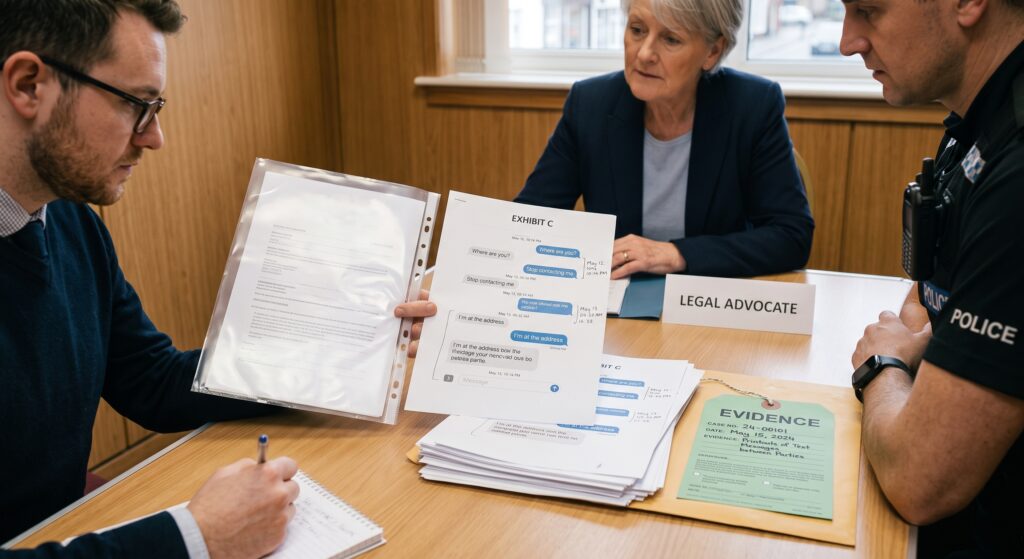
- For a PFA hearing, consider bringing printed copies of important text and app messages, such as iMessage, WhatsApp, and Facebook Messenger, rather than relying only on your phone. How exhibits are presented can depend on the court’s procedures and the circumstances of the case.
- Pennsylvania’s rules allow a voicemail to be identified by someone who has heard the speaker’s voice under circumstances that connect it to that person. Saving a voicemail someone chose to leave for you is different from secretly recording a call or conversation, which Pennsylvania’s wiretap law restricts.
- Call logs show that contact happened and how often, even when they do not show what was said. Phone carrier records can show similar information, such as numbers, dates, and times, but they often do not include what a message said.
Under Rule 901, the person offering a message must produce evidence sufficient to support a finding that it is what they claim it is.
[1] For digital evidence, the rule gives these examples of ways to show who wrote a message:
- Direct evidence, such as testimony from someone with personal knowledge.
- Identifying content in the message itself.
- Proof that a person owned, possessed, controlled, or had access to the phone or account at the relevant time, when corroborated by circumstances indicating they wrote it.
The official comment to the rule adds points that come up often in PFA hearings:
- Owning the phone or account is not enough by itself to prove who wrote a message. The comment cites a case in which a social media account bearing the defendant’s name, hometown, and high school was insufficient on its own.
- Identifying content can include the sender naming themselves or showing knowledge only the author would have.
- If the other side admits sending a message, that admission can help authenticate it. Whether the contents can be used to prove what they say is a separate hearsay question, covered below.
- The person offering a message does not have to prove that no one else could have written it.
The other side may claim the number is not theirs, that someone else had their phone, or that the screenshot was edited. A message that includes details only the sender would know, comes from a number or account tied to that person, and fits what happened before and after is much harder to dismiss.
If you were served with a petition, these are the same points our attorneys press in PFA defense when messages are offered against you: whether the messages were properly connected to you, what the rest of the conversation shows, and whether anything was cropped or changed. Do not contact the other party to argue about the messages, and do not delete anything from your phone, even if the messages look bad.
Disappearing, Edited, and Unsent Messages
Some apps delete messages automatically, and some let the sender edit or unsend a message after it is delivered. That does not automatically put the message out of reach. Under Pennsylvania’s rules, when the original is lost or destroyed, and not through the bad faith of the person offering it, other evidence of what it said can be admitted, including testimony from the person who saw it.
[2] You would still need to connect the message to its sender, and the judge decides how much weight to give your account.
- As soon as you safely can, write down what the message said, when you saw it, and the account or number it came from.
- If an app showed that a message was edited or unsent, note that too.
- Tell your attorney, who can advise whether other records of the message may exist.
Authentication and Hearsay Are Different Questions
Under Pennsylvania’s rules, hearsay is an out-of-court statement that a party offers to prove the truth of what it says. A message can be authenticated and still draw a hearsay objection. Two situations come up often in PFA hearings. First, a message offered for a purpose other than its truth, such as showing that a threat was made at all, is not hearsay. Second, when one side offers the other side’s own messages against them, Pennsylvania treats them as an opposing party’s statement, which is an exception to the hearsay rule.
[3] That covers the most common situation: a plaintiff presenting the defendant’s texts, or a defendant presenting the plaintiff’s. Whether a particular message is admissible still depends on who wrote it, who is offering it, and why.
Why Complete Message Threads Can Help
A single screenshot invites two questions: what came before it, and what came after. A threatening line can read differently once the judge sees the message that prompted it, and a cropped image makes the judge wonder what was left out. If you introduce only part of a conversation, Pennsylvania’s rules let the other side ask the court to have the rest, or a related message, introduced at the same time when fairness requires it.[4]
- Keep the entire thread, including your own replies, stored where the other person cannot reach it.
- Do not present screenshots in a way that removes important context or could make the conversation misleading.
Deleted or Edited Messages Create Credibility Problems
PFA hearings often turn on who the judge believes. Missing or altered messages can give the other side an argument: if part of the story was deleted or changed, why trust the rest?
- Cropping or editing a screenshot can create disputes about authenticity or context. Keep the original messages or unaltered screenshots available, and clearly separate any copies you mark up for your own use.
- If messages were lost when a phone broke or was replaced, say so plainly rather than leaving the judge to guess.
- If you believe the other side deleted or altered messages, tell your attorney.
Messages are rarely the only proof. Photos, medical and police records, and witness testimony each follow their own evidence rules at a protective order hearing.
Frequently Asked Questions
Do screenshots count as evidence at a PFA hearing in Pennsylvania?
They can, once they are authenticated. Testimony from the person who received the messages, identifying details in the messages, and proof tying the number or account to the sender can all help connect a screenshot to its author. Bring the complete thread, not a cropped piece of it.
Can the other side claim they never sent the texts?
Yes, and it is one of the most common challenges. Owning the phone or account is not enough by itself to prove who wrote a message, but ownership combined with other circumstances, such as details only the sender would know, can be. The person offering the message does not have to prove that no one else could have written it.
Is a text message hearsay?
It can be. A message offered to prove that what it says is true raises a hearsay question. A message offered for another purpose, such as showing that a threat was made at all, is not offered for its truth. And when you offer the other side’s own messages against them, they are treated as an opposing party’s statement, an exception to the hearsay rule. Your attorney can explain which rule applies to each message.
What if some of the messages were deleted?
Say so, and explain why. Unexplained gaps raise questions about missing context, and an innocent reason, such as a broken or replaced phone, is better stated plainly than left for the judge to guess. Do not delete anything else.
Can I use a message that disappeared or was unsent?
Possibly. If the original is gone and you did not get rid of it in bad faith, Pennsylvania’s rules allow other evidence of what it said, including your testimony. Write down what you saw as soon as you safely can, and tell your attorney.
Talk With a Lancaster PFA Lawyer About Your Messages
Our attorneys represent both plaintiffs and defendants in PFA cases across Lancaster County, and PFA hearings move fast. Do not wait to find out how your messages will hold up.
Call Lancaster Law Group at (717) 696-6329 or schedule a consultation, and bring your screenshots or printouts of the messages. If you still have the phone that holds them, ask us whether to bring it to help authenticate them. Our attorneys will review your messages, lay out your options step by step, and fight to protect your rights.
If you are in immediate danger, call 911. National Domestic Violence Hotline: 1-800-799-7233 (24/7), or text START to 88788.